the patient's mother
The Screwtape LettersThe patient's mother is an elderly woman whose everyday relationship with her newly converted son becomes a proving ground for the difference between inward religious feeling and practical care. Screwtape’s account makes her a target of his colleague Glubose’s long influence, but also exposes how the son can turn prayer into a substitute for attending to her actual needs. The portrait is deliberately limited: the preface warns that Screwtape lies and that his picture of the patient's mother may not be wholly just, so his claims reveal the demonic campaign as much as they reveal her.
Identity and Narrative Perspective
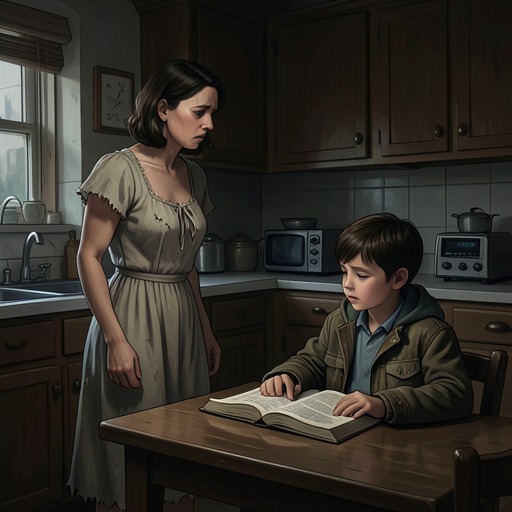
The patient's mother appears principally through Screwtape’s letters to Wormwood, not through an independent account of her thoughts. Screwtape reports that she is elderly, sharp-tongued, and affected by rheumatism; he also describes her habits around food and her relations with servants, hostesses, and friends. These details establish her place in the son's domestic life, while the letter form keeps the reader at a distance from her own perspective. Even apparently concrete judgments reach the reader through an adversarial narrator who has an interest in interpreting human behavior as material for demonic strategy.
That limitation is made explicit in the preface: the narrator has not attempted to identify the human figures and considers it very unlikely that Screwtape's portraits, including that of the patient's mother, are wholly fair. The mother should therefore not be treated as a transparent case history. Her characterization carries a built-in tension between the specific domestic behavior Screwtape describes and the distortion invited by his purpose and point of view.
The Son's Conversion and Their Domestic Relationship
After the son's conversion, Screwtape warns Wormwood that the change may spread from the patient's inner life into his behavior toward his mother. He urges Wormwood to act before the new religious standard reaches their relationship, and to coordinate with Glubose, who is assigned to the mother. Their scheme is to sustain a settled pattern of mutual annoyance through small, repeated irritations rather than a single decisive rupture.
The son's attention is to be diverted from obvious duties toward an abstract examination of his spiritual state. Screwtape presents this as a way to let him scrutinize himself without recognizing facts about his conduct that would be clear to anyone sharing his home. The mother-son relationship consequently serves as a concrete measure of conversion: inward reflection can coexist with continued failure to behave considerately in the household.
Prayer for his mother is not, in Screwtape's plan, something Wormwood can simply prevent. Instead, Screwtape advises making it ineffectual by directing the son's concern toward what he imagines to be the state of her soul, while keeping him from concern for her rheumatism. He may then treat inconvenient or irritating actions as evidence of her sins and, in prayer, address an imagined mother increasingly unlike the actual woman at the breakfast table. The intended consequence is a widening gap between religious concern for an abstraction and care for the person beside him.
Screwtape's strategy also depends on selective attention to irritation. Wormwood is told to fix the son’s awareness on the lift of his mother's eyebrows, which he has disliked since childhood, and to encourage him to assume that she makes the gesture deliberately. The son is not to notice that his own tones and expressions may irritate her in turn. This asymmetry makes a familiar feature of shared life seem like deliberate offense while concealing the son's corresponding contribution to their friction.
The letters describe a further mechanism: each person is to judge their own words by their literal wording but interpret the other's words through tone, timing, context, and suspected intention. The result is a mutual double standard in which apparently harmless remarks can wound, each party can leave a quarrel believing themselves nearly innocent, and deliberate offense can be followed by indignation at the other person's response. The account presents domestic antagonism as a habit built from small acts of interpretation, not simply from openly hostile words.
Appetite and Household Consequences
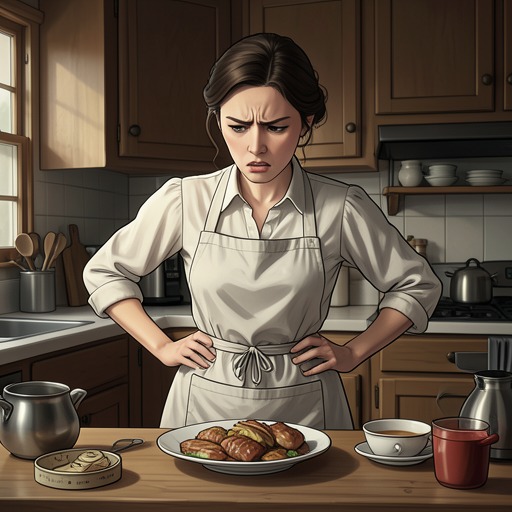
In a later letter, Screwtape describes the mother's appetite as a form of gluttony centered not on quantity but on exactness and delicacy. He says that she asks for a cup of tea that is weak but not too weak and a tiny piece of especially crisp toast, or sends away a restaurant dish as too large and asks for a quarter of it. Since her requests appear modest, she can regard herself as temperate; Screwtape instead identifies the demand for a particular, troublesome-to-achieve pleasure as the issue. These are his interpretations of her conduct, not an independent account of her motives.
The alleged consequences extend beyond meals. Screwtape says that cooks give notice and friendships cool because the desired tea, egg, or toast is never prepared properly to her satisfaction. He describes an “All-I-want” state of mind in which a small request conceals an exacting demand, and links the resulting daily disappointment to ill temper. The remembered standard she associates with the days when good servants were available is, in Screwtape’s reading, less evidence of better service than of senses once more easily pleased and of pleasures beyond the table that made food less central.
Screwtape further claims that Glubose counters any suspicion the mother might have about her interest in food by suggesting that she does not care what she eats herself, but wants things nice for her son. The explanation is sharply ironic within his account: he asserts that her appetite has itself been a major source of the son's domestic discomfort for years. The episode connects their household conflict to Screwtape's broader claim that an apparently minor indulgence can shape conduct toward other people.
Family, the War, and the Limits of the Portrait
When air raids threaten the town, Screwtape reports that the patient's mother is praying for her son's bodily safety, alongside the patient's lover. He objects to Wormwood's excitement about possible destruction because the patient's death would prevent the devils from continuing their effort to corrupt him. The mother's concern thus appears in a moment when Screwtape's immediate objective—keeping the patient alive for further temptation—coincides with the concern of his family. The letter does not give her words or describe her actions beyond the reported prayer, but it establishes that her attachment to her son remains consequential even within a portrait otherwise shaped by domestic annoyance.
The book does not offer a separate account of the mother's response to her son's conversion, or settle whether she resents its influence, feels overlooked, or believes that his religious interest makes too much fuss. Screwtape asks Wormwood about these possibilities rather than answering them. That unanswered question, together with the preface’s warning about the fairness of his portrait, leaves her religious position and inner life unresolved. What the letters do establish is the structural importance of the relationship: the mother’s daily presence gives the son's conversion a practical test, while Screwtape's hostile account warns readers not to confuse his strategic description with the whole person.